Freeze the Future 2026: Ice Diving for Freshwater Science
From February 1 to 8, 2026, Tec Dive Canada supported the Freeze the Future initiative with specialized ice diving operations on Lake Simcoe and in Barrie, Ontario. The expedition brought together experienced divers, surface support teams, scientists, and underwater documentarians to collect samples from beneath the ice and contribute to research on freshwater ecosystems, winter lake conditions, and climate change.
About Freeze the Future
Freeze the Future is a community science program that uses trained ice divers to collect algae and water samples from beneath frozen lakes. These samples help researchers better understand what is happening below the ice during winter and how warmer seasons, reduced ice cover, and changing ice quality are affecting freshwater environments.
For Tec Dive Canada, the 2026 expedition was an opportunity to combine technical diving experience with meaningful science. Ice diving is a demanding overhead-environment activity, and every operation was planned around one priority: safety first.
Expedition Locations
The team worked from two Ontario dive sites during the expedition: Sibbald Point Provincial Park Boat Launch in Georgina and Centennial Park in Barrie. Both locations offered different under-ice conditions, which made the week scientifically valuable and operationally challenging.
Photos from the dive operations can be viewed at TecDive.ca/Gallery.
Preparing an Ice Diving Site
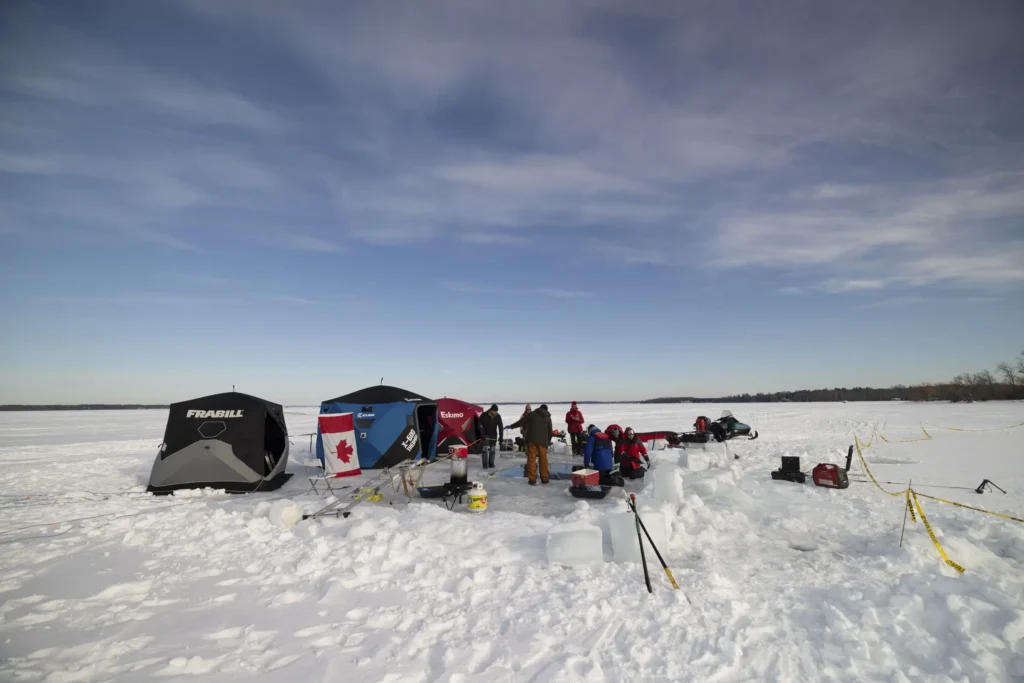
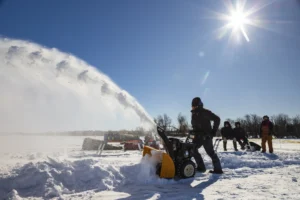
Before any diver entered the water, the team completed extensive site preparation. Ice diving requires a controlled entry and exit point, a reliable surface-support system, and clear emergency procedures. Preparations included clearing snow from the work area, marking and cutting the dive hole, removing ice blocks and slush, rounding the corners of the opening, installing a ladder system for diver egress, setting up heated preparation tents, preparing hot water, and organizing diving lines, harnesses, tenders, and rescue-diver positions.
These steps are essential because ice diving leaves divers with one primary exit point. A trained surface team, proper line management, rescue readiness, and cold-water equipment discipline are all critical to safe operations.
Scientific Diver Training Under the Ice
The expedition also included an IANTD Scientific Diver Algae Extraction under-ice distinctive specialty course. This advanced ice diving program was designed to prepare divers to conduct algae extraction dives under ice with the support of a surface tender and trained topside team.
Running the course alongside the expedition created a unique opportunity for divers to build specialized scientific-diving skills while contributing to real freshwater research.
The Team
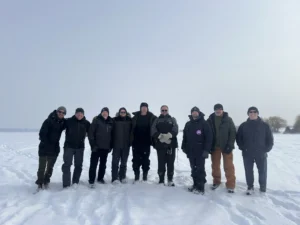
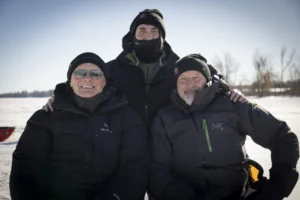
The Tec Dive Canada team included Dale McKnight, Jesse McKnight, Richard Notter, Todd Rhoden, Miro Debicki, and David Schranz, with additional expedition support from divers and underwater documentation specialists throughout the week.
Site One: Sibbald Point, Georgina
The first dive site was Sibbald Point Provincial Park Boat Launch in Georgina. On February 1, the team cleared snow from the ice, prepared the work zone, and cut the dive hole using chainsaws and specialized ice diving equipment.
When the hole was opened, the team discovered a significant amount of slush. Cameras were sent below the surface to assess the conditions before divers entered the water. The footage showed frazil ice throughout the area. Frazil ice is a loose, slush-like collection of needle-shaped ice crystals that can form in turbulent, supercooled water.
This was not the smooth under-ice surface the team originally expected for algae collection. However, after discussion with the scientists, the unusual conditions became an opportunity. Because data from this type of under-ice environment is limited, the team decided to collect as many frazil ice samples as possible, preferably close to the solid ice surface.
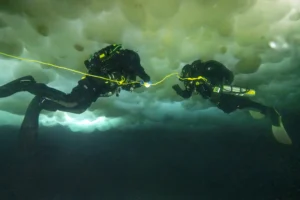
On February 2, a team of ice divers entered the water to collect samples. Dale McKnight and David Schranz handled sample collection, Calum Cawley transported samples to and from the surface, Jill Heinerth completed underwater documentation, Todd Rhoden served as rescue diver, and Richard Notter and Miro Debicki provided surface support.
Due to the frazil ice conditions, the team decided not to attempt a second dive at Georgina. Instead, operations shifted to Barrie earlier than planned, where frazil ice was not expected. Before leaving the site, the team closed the hole by replacing the removed ice blocks and marking the area for safety.
Site Two: Centennial Park, Barrie
The second dive site was Centennial Park in Barrie. The goal was to prepare a new hole and complete two sample-collection dives over the next three days.
On February 3, the team cleared the dive area and prepared the hole. Conditions were more typical, and once the hole was opened, it was clear that frazil ice was not present. This allowed the divers to conduct standard algae sample collection from the underside of the ice.
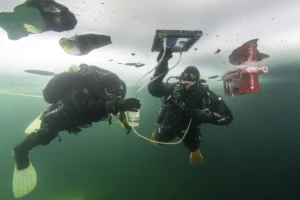
On February 4, ice diving operations resumed. Dale McKnight and Brad Snyder collected samples, Jill Heinerth documented the dive underwater, David Schranz served as rescue diver, and Richard Notter and Miro Debicki provided surface support. Algae samples were successfully collected from both snow-covered and snow-cleared ice surfaces.
On February 5, another ice diving operation was completed. The sample-collection dive team included Andrew Budziak, Calum Cowley, and Dave Bailey. Brad Snyder served as rescue diver, while Dale McKnight, Richard Notter, Miro Debicki, and David Schranz supported operations from the surface. Additional algae samples were successfully collected.
After the dive, the hole was closed by replacing the removed ice blocks, and the area was clearly marked to prevent anyone from travelling over it accidentally.
Final Day and Expedition Wrap-Up
On February 6, the team reconvened early at the Centennial Park boat launch, approximately 100 metres from the previous operation. After monitoring incoming weather conditions, the decision was made not to prepare a new hole. Safety remained the deciding factor, and the expedition was brought to a close.
The team gathered afterward at a local breakfast diner to review the week, discuss lessons learned, and reflect on a successful series of ice diving operations in support of freshwater science.
Why This Work Matters
Ice-covered lakes are changing. Warmer winters, reduced ice cover, and changing ice quality can affect both human safety and the freshwater ecosystems that depend on winter conditions. By collecting samples from beneath the ice, expeditions like Freeze the Future help scientists study microorganisms, algae, and water conditions that are otherwise difficult to access.
For divers, the expedition also highlights the value of training, teamwork, and disciplined procedures. Ice diving is never casual diving. It requires planning, specialized equipment, tenders, rescue readiness, and a team that understands the risks of operating in an overhead, cold-water environment.
Tec Dive Canada’s Role
Tec Dive Canada was proud to orchestrate and direct the diving operations for the Freeze the Future 2026 expedition. The week demonstrated what is possible when technical diving expertise, scientific curiosity, and a strong safety culture come together beneath the ice.
To see photos from the expedition and learn more about Tec Dive Canada’s dive operations, visit TecDive.ca/Gallery.